Overview
Observe what the material shows.
Understand a glassy natural material
Obsidian is volcanic glass formed when silica-rich lava cools rapidly. A finished surface may appear deep black, smoky, banded or subtly reflective depending on the material, lighting and polish. Because photographs of dark reflective objects can conceal contours, look for side views, scale references and images that show both highlights and shadow. Natural origin does not make every object identical or every edge equally durable.
Descriptions should distinguish the stone itself from cords, metal findings, adhesives, felt and other construction materials. Ask for dimensions, weight and finish, and avoid drawing conclusions from a trade name alone. A mirror-like face, a matte plane and a deliberately textured area can all be valid design decisions. What matters is that the finish is even where intended, the edges are resolved and the object is suitable for its stated use.
Inspect edges, fittings and proportion
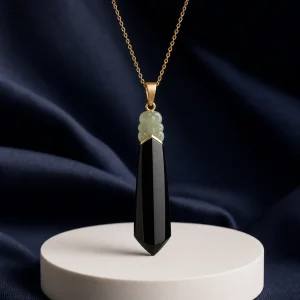
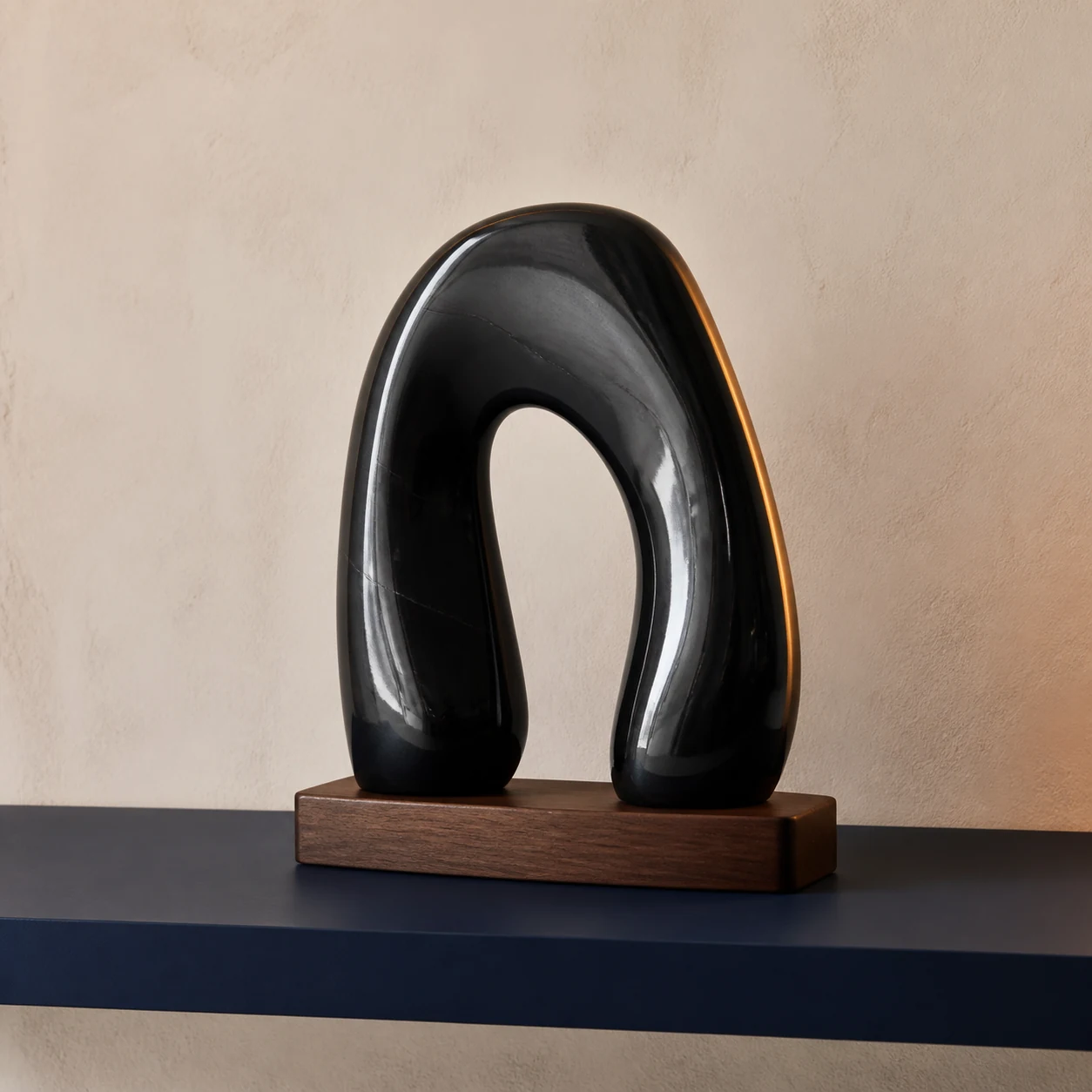
Glass-like materials can chip at exposed corners or thin sections when struck. On jewelry, inspect drill holes, bails, cord paths and the transition between polished faces and edges. On a sculptural object, check that the base is level and that contact points distribute weight without concentrating pressure on a fragile corner. A sharp decorative silhouette should still be comfortable and safe to handle as directed.
Use measurements rather than assuming scale from a dark studio image. A pendant should be compared with the wearer’s preferred length and weight; a desk object should be mapped onto the actual surface, including clearance for keyboards, books and cleaning. Negative space is part of an arch-shaped object, so consider both the outer dimensions and the opening. Stable proportion and placement are more useful criteria than an abstract promise attached to the stone name.
Wear and display with deliberate handling
Keep wearable obsidian from striking hard worktops, gym equipment or other jewelry. Put the piece on and remove it over a soft surface, and do not pull a pendant by the stone when adjusting its cord. For display, choose a level shelf outside busy pathways. Clean felt feet and use two hands for heavier objects; sliding the base can trap grit and mark both the finish and the furniture.
“Focus” and “protection” appear as navigation and cultural themes. They can describe the mood of an object, a design story or the intention behind a gift, but they are not evidence that the material can protect a person, treat a condition or improve performance. Choose the piece for disclosed material, form, workmanship and the context in which it will actually be used.
Clean, store and reassess condition
Remove dust with a soft, clean cloth. Avoid abrasive pads, powders, harsh chemicals, steam and sudden temperature changes. If the product instructions allow a damp cloth, use minimal moisture and dry immediately, paying attention to drilled holes, cords and bonded parts. Store jewelry in its own soft compartment and keep display objects away from unstable shelves and hard moving objects.
Periodically inspect for chips, hairline cracks, loosened settings, frayed cord or detached feet. Stop wearing or moving a damaged piece until it has been assessed by someone familiar with glass-like stone and the relevant construction. This material guide is general educational information, not medical or safety certification. It makes no therapeutic, protective or personal-performance claim.
Cultural context
Meaning is context, not a guarantee.
Editorial themes: Focus, Protection
Symbolic associations are presented as cultural and editorial context. They do not promise medical, financial, relationship, protective or personal-performance outcomes.
Reading principles
Compare the object through disclosed facts.
Variation
Look for the stated range of tone, grain, inclusions and translucency rather than expecting identical pieces.
Finish
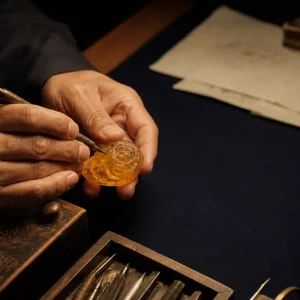
Read polish, edge, joinery and surface treatment together with clear scale photographs.
Suitability
Choose for the intended wear, room, handling and gifting situation.
Placement and use
Let scale and handling guide the setting.
Relevant contexts: Home, Wear, Work
Use the dimensions, weight, stability and exposure notes on each product page. Keep display objects on a level surface and wearable pieces away from repeated impact.
Care
Begin with gentle, material-specific handling.
Follow the care note supplied with the specific object. Unless its material instructions state otherwise, avoid impact, prolonged moisture, strong heat, perfume, household chemicals and abrasive cloths.
When uncertain, contact client care with the product name and a clear photograph before cleaning.