Overview
Observe what the material shows.
Read color, structure and variation
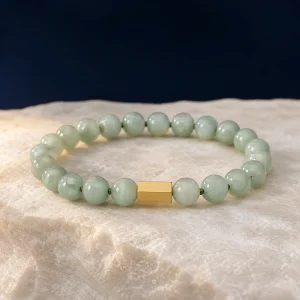
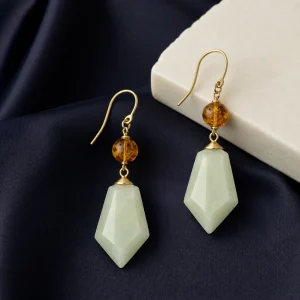
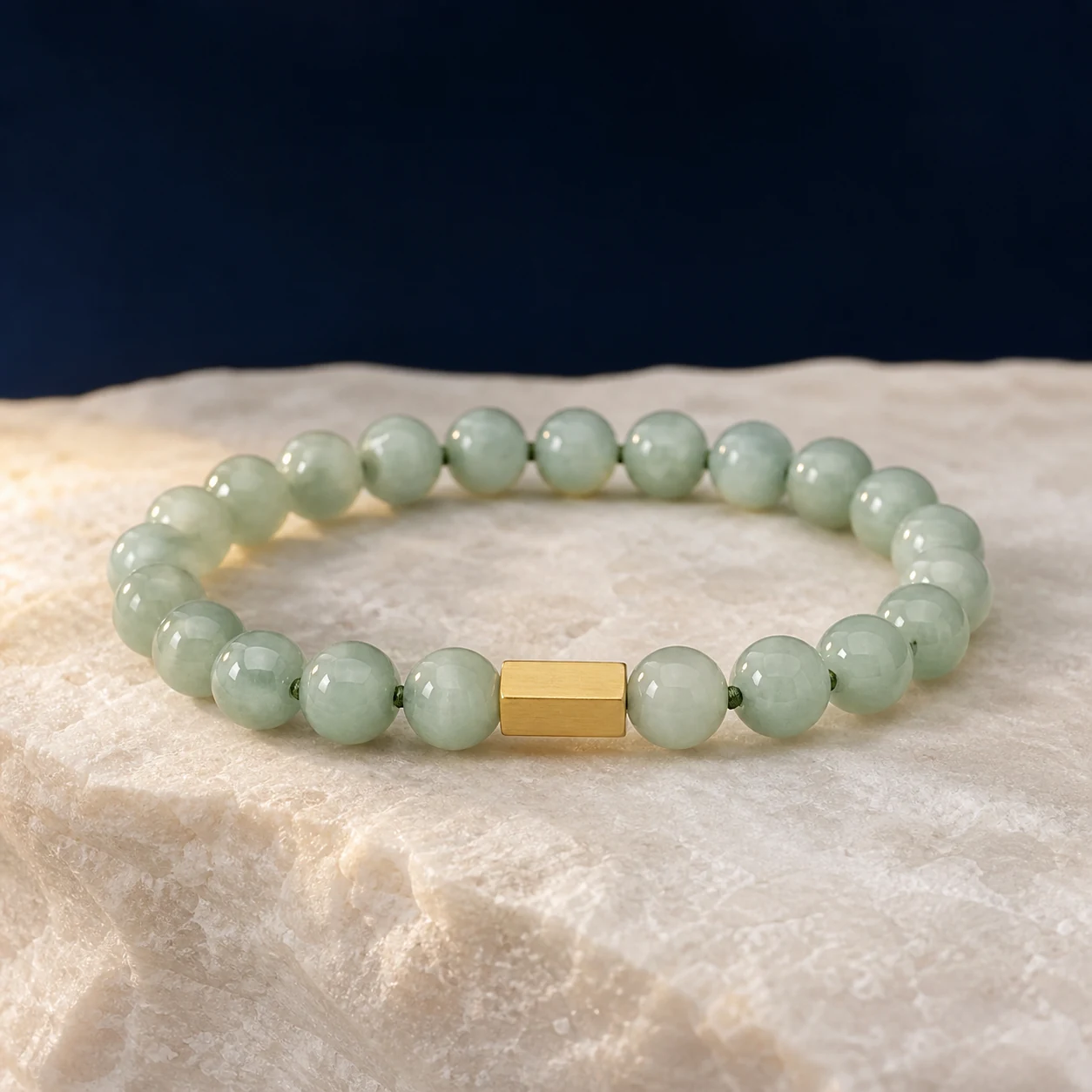
Jade is a family of visually varied materials rather than one uniform shade. Finished pieces can move from clouded celadon and grey-green to deeper moss tones, and even one object may show changes in translucency, grain or small mineral features. Those differences are part of the material record. They should be shown through representative photography and described plainly instead of being hidden behind a single ideal color.
Begin with the information that can be checked: the seller’s material description, dimensions, weight, finish, construction and images from more than one angle. A photograph taken against a bright light may reveal translucency but can make the color look lighter than it will indoors. Compare daylight, neutral studio and on-body or in-room views where available. If treatment, origin or a precise mineral classification matters to the purchase, ask for documented information rather than inferring it from color alone.
Evaluate form, finish and scale
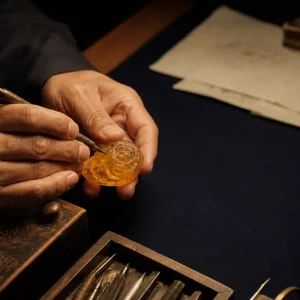
For beads, look at the consistency of drilling, surface polish and the way neighboring pieces sit together. For pendants or carved objects, inspect edges, contact points, fittings and any area where a cord, pin or stand carries weight. Natural variation is expected; loose hardware, unstable bases and sharp unfinished edges are workmanship questions and should not be explained away as natural character.
Scale changes how jade reads. A small polished bead emphasizes rhythm and color sequence, while a broader plane makes clouds, veins and tonal transitions more visible. Use listed measurements rather than a tightly cropped photograph. For bracelets, compare the finished inner circumference with a comfortable piece already owned. For a gift, choose a closure and weight that suit the recipient’s habits, and confirm whether resizing or exchange is possible before ordering.
Choose for wear, gifting and placement
A wearable piece should sit securely without being forced over the hand or allowed to strike a desk repeatedly. Consider sleeves, watch placement, fastening dexterity and whether metal fittings are disclosed. Home objects need a stable shelf, dry surface and enough clearance that they are not handled whenever nearby items are moved. Felt contact points can protect both the object and furniture, but they should remain clean and firmly attached.
Jade carries many cultural histories and can hold personal or family meaning. This guide treats words such as “calm” and “connection” as editorial routes for browsing and conversation, not as measurable effects. A thoughtful gift can acknowledge a story, milestone or aesthetic preference without assigning an outcome to the recipient. When cultural context is important, include it accurately and leave room for the recipient’s own interpretation.
Care and long-term stewardship
After wear, wipe the surface with a clean, soft cloth and store the piece separately from harder stones, exposed metal edges and abrasive packaging. Avoid drops, sustained heat, perfume, household chemicals and ultrasonic equipment unless the specific product instructions explicitly permit them. If moisture is allowed, use a barely damp cloth and dry the surface immediately rather than soaking the object.
Inspect cords, elastic, clasps, settings and felt feet periodically, especially before travel or gifting. Stop using the piece if a fitting loosens or a new chip appears near a load-bearing point, and ask a qualified repair professional for advice. Material notes and symbolic associations are educational and cultural only. They are not medical advice and do not claim to diagnose, treat, prevent or change any health or personal outcome.
Cultural context
Meaning is context, not a guarantee.
Editorial themes: Calm, Connection
Symbolic associations are presented as cultural and editorial context. They do not promise medical, financial, relationship, protective or personal-performance outcomes.
Reading principles
Compare the object through disclosed facts.
Variation
Look for the stated range of tone, grain, inclusions and translucency rather than expecting identical pieces.
Finish
Read polish, edge, joinery and surface treatment together with clear scale photographs.
Suitability
Choose for the intended wear, room, handling and gifting situation.
Placement and use
Let scale and handling guide the setting.
Relevant contexts: Gift, Wear
Use the dimensions, weight, stability and exposure notes on each product page. Keep display objects on a level surface and wearable pieces away from repeated impact.
Care
Begin with gentle, material-specific handling.
Follow the care note supplied with the specific object. Unless its material instructions state otherwise, avoid impact, prolonged moisture, strong heat, perfume, household chemicals and abrasive cloths.
When uncertain, contact client care with the product name and a clear photograph before cleaning.